
You stand. The kids watch the wine to see if the level drops. It's a tradition built on hope, on the idea that redemption is close enough to knock.
This year, Eliyahu didn't come to the door. He was already gone. He was in Syria. In Lebanon. In Gaza. In the skies above Iran. Sitting behind a screen in a bunker somewhere, directing a strike or tracking an incoming threat so that families in Modiin and Raanana and Beit Shemesh could sit down and say Mah Nishtanah without running to a shelter.
Our Eliyahu this year is 18 years old.
He drafted a few months ago. He went through a shortened training cycle because the army needed bodies faster than the system was designed to produce them. He has been working 20-hour days since the war started. He sleeps in shifts. He eats whatever is available. He calls his parents when he can, which is almost never, and when he does, he tells them he's fine. He's always fine. That's what soldiers say.
His parents set a place for him at the seder table anyway. The plate stayed clean. The wine stayed full. His younger sister kept looking at the empty chair, and nobody said anything because there was nothing to say that the chair wasn't already saying.
Multiply that chair by thousands.
There were soldiers who spent seder night on patrol in southern Lebanon, walking terrain that three months ago was under Hezbollah control. Soldiers who ate matzah out of a ration pack on a base near the Syrian border. Soldiers who sat in the cockpits of jets that flew missions most of the world will never hear about. Soldiers who stared at monitors for twelve straight hours tracking missile trajectories, making decisions that determined whether sirens went off in Tel Aviv.
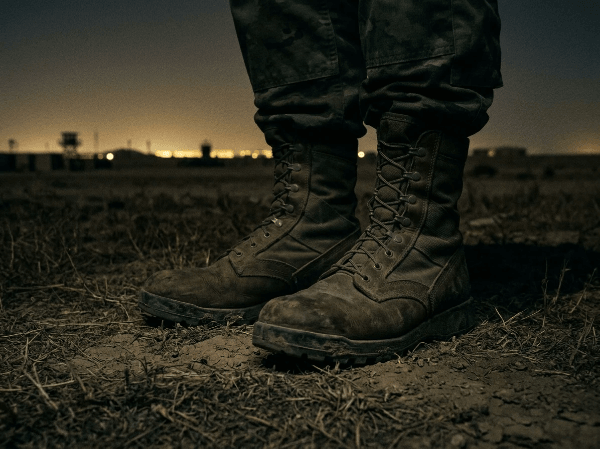
There were soldiers at the fence line around communities that were attacked on October 7th. Standing guard so that the families who came back, the ones who chose to rebuild, could have a seder in the same rooms where they once hid in safe rooms.
Some of them are 18. Some are 19. Some are reservists in their 30s and 40s who left jobs and families for the third or fourth time since the war began. The age doesn't matter. The cost is the same. Time away from the people they love, spent protecting people they've never met.
In previous years, the empty seat at the seder was for the hostages. We poured a cup for them. We left a chair open as a symbol, a reminder that our freedom was incomplete as long as they were held in tunnels beneath Gaza.
This year, the empty seat belongs to the soldiers.
The ones who made it possible for the rest of us to sit with our families and read from the Haggadah and sing Dayenu and argue about whether the brisket is overcooked. The ones who stood between us and the people who want us gone, so that we could do the most ordinary thing in Jewish life: gather around a table and tell our children the story of how we survived.
The seder tells us that in every generation, someone rises up to destroy us. The Haggadah doesn't say how we survive. It just says we do. But the how has a face this year. It has thousands of faces. Young faces, tired faces, faces that haven't seen a proper bed in weeks. Faces that belong to sons and daughters and husbands and fathers who said goodbye to their families and went to stand at the border so the rest of us could open the door for Eliyahu.
They are our Eliyahu.
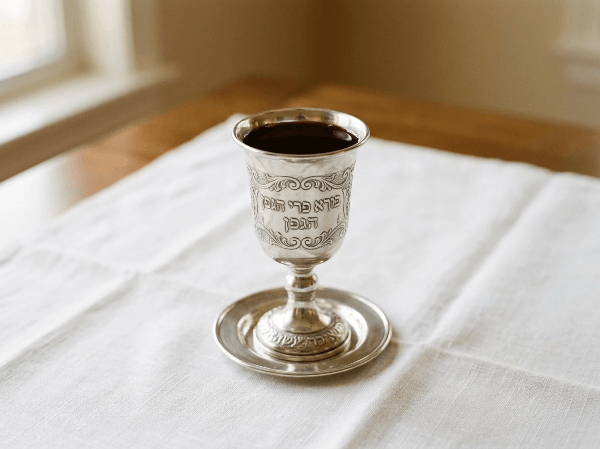
Pour the cup.