
I started a new job last week. Monday morning. New desk, new team, new ID badge that still smells like plastic. The kind of fresh start you plan for and look forward to and allow yourself to believe might signal a stretch of normalcy.
Then the announcement came. Massive call-up. Reservists heading North. The operation to finish what should have been finished long ago. Hezbollah. Iran. The full weight of it.
Two weeks before Passover.
I read the news on my phone in my new office, and the pull hit me the way it always does. Physical. Like a hand on the back of your shirt, tugging you toward the door.
I know guys from my unit who are already on their way. Some transferred temporarily to other units months ago because they couldn't sit still. They wanted to keep serving. They wanted to be part of what Israel is doing right now. The country is reshaping the security map of the Middle East, and these guys refused to watch it happen from their couches.
I understand that impulse because I share it. Seventy-five days of service since October 7th. Three deployments. Time on the Gaza border. Time in the field as Rasap, making sure the guys had what they needed to do the job. Every piece of that work mattered. Every day of it left a mark. And now the North is happening, and my unit is mobilizing, and I am sitting in Modiin with a new laptop and a clean pair of shoes.
The guilt is specific. It has a texture. You hear the names of guys heading out, guys you trained with, guys who covered your position while you were home, and you feel like you're letting them down. The rational part of your brain says you have a new job, a family, responsibilities that require you to be present. The soldier part of your brain says none of that matters when your brothers are packing their bags.
Passover makes it worse.
Two weeks from now, families across Israel will sit around the Seder table and tell the story of freedom. They will read about leaving Egypt, about walking into the unknown, about the cost of liberation. And thousands of those families will have an empty chair. A father who should be breaking matzah with his kids will be in a staging area near the Lebanese border, checking his gear and waiting for orders.
The kids will ask the Four Questions. The fathers won't be there to hear them.
I think about my own kids. The way they look at me when they sense something is shifting. Kids pick up on everything. They notice the extra phone checks. They feel the tension between their parents even when the conversation happens behind a closed door. They know what a packed bag in the closet means, even if nobody explains it. I've written about this before. The split consciousness of living between the family and the phone. Half present, half running scenarios.
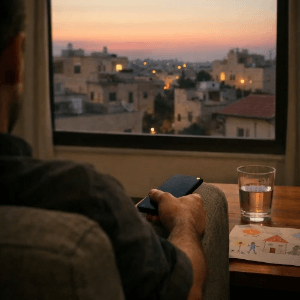
My wife carries her own version of this weight. She has emergency plans. She knows the shelter routes. She's calculated how fast she can get the kids to safety during a rocket attack. When a father serves in the IDF, his entire family serves alongside him. And when a father stays home during a call-up, the family still serves. The sirens don't distinguish between active duty and reserves. The rockets don't check your deployment status.
That's the other half of the pull. The part that says stay.
Stay because your kids need you in the shelter. Stay because your wife shouldn't have to manage the fear alone. Stay because Passover is supposed to be about family, and your family needs you at the table, not on a base.
I talked to a friend yesterday. He's going. He packed his bag while his daughter watched. She's six. She asked him if he'd be home for the Seder. He told her he'd try. They both knew what that meant.
Another friend told me he requested a spot in the call-up even though his unit wasn't mobilized. He wanted in. He said he couldn't sit this one out. Not now. Not when the objective is to finally eliminate the threat from the North. He has three kids. His wife is seven months pregnant.
These are the decisions being made right now in living rooms across Israel. Not by politicians or generals. By fathers who are weighing the Seder table against the staging area. By mothers who are running the math on formula and shelter supplies and how many days they can manage alone. By children who are learning, earlier than any child should, what it means to live in a country that asks everything of the people who love it.
I keep opening the group chat. Watching the updates. Seeing who's been called and who's volunteering and who's coordinating equipment. The work we've done at Smiles for the Kids to get essential gear to soldiers matters more right now than it did last week. Ceramic plates, ballistic vests, night vision. The guys heading North need to be equipped, and the families they're leaving behind need to know someone is thinking about them too.
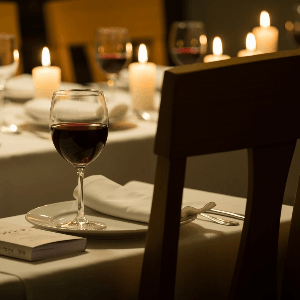
I haven't decided yet. That's the honest answer. Part of me is already mentally packing the duffel. Part of me is looking at the calendar and counting the days until the first Seder and thinking about my kids' faces in the candlelight.
Israel is making history right now. The operation in the North could change the strategic reality of this region for a generation. I want to be part of that. I want to stand with the guys I served with and do the work that needs to be done.
But I also want to be home. I want to hear my kids ask the Four Questions. I want to be the one who opens the door for Elijah. I want to sit at the table with my family and say "Next year in Jerusalem" and mean it as more than a prayer.
Every reservist in Israel is carrying some version of this weight right now. The guys who are going and the guys who are staying. The ones who packed the bag and the ones who stare at the closet. All of them are giving something. All of them are paying a price.
The Haggadah says we were all slaves in Egypt. Every generation is supposed to see itself as if it personally left. The reservists heading North two weeks before Passover don't have to imagine it. They are living it. Walking into the unknown so their families can sit at the table in freedom.
And then there's the work I can do from here.
Since October 7th, Smiles for Chayalim has distributed over $1.2 million and reached more than 55,000 people. Soldiers and their families. The guys who go and the wives and kids who stay behind. Every ceramic plate we fund, every family we feed during a deployment, every piece of gear we put into a soldier's hands before he heads North is an act of service. It counts. It matters. It saves lives.
I may not be on the bus heading to the staging area this week. But the soldier sitting on that bus might be wearing a vest we funded. His wife might get a meal delivery next Thursday because someone donated fifty dollars. His kids might get a Passover package because someone who lives six thousand miles away decided that an empty chair at a Seder table in Israel was their problem too.
Raising money. Getting gear to the front. Making sure the families left behind are not forgotten. That's how I serve from both sides of the line. That's how I stand with my brothers in the North and sit with my children at the Seder table on the same night.
I can't be in two places. But this work puts me in both worlds.
The guys heading North are carrying the weight of a nation. The least I can do is make sure their load is a little lighter and their families are taken care of while they're gone.
If you want to stand in both worlds with me, visit Smiles for Chayalim or donate directly at givebutter.com/smiles-for-chayalim.